
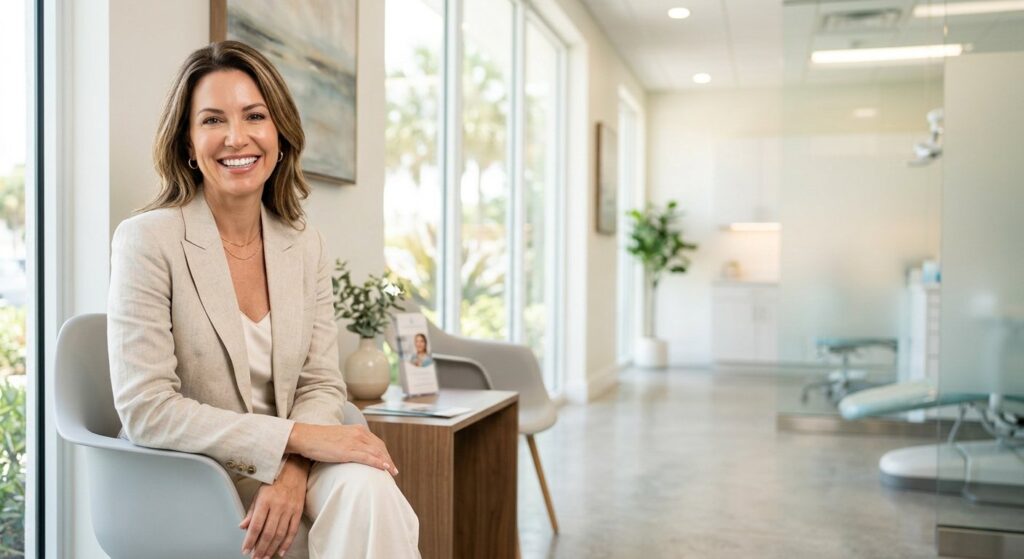
Yes — Invisalign is absolutely worth considering for adults over 40. Clear aligners work just as effectively on adult teeth as they do on younger patients, and the benefits go well beyond appearance. Straighter teeth are easier to clean, reduce uneven wear, and can ease jaw discomfort. For most healthy adults, age alone is not a barrier to treatment.
- Age is not a disqualifying factor for Invisalign — millions of adult patients complete clear aligner treatment successfully each year.
- Straighter teeth support better gum health and reduce long-term wear, making treatment a functional investment, not just a cosmetic one.
- Treatment length varies by case; many adults finish in 12–18 months.
- Invisalign fits discreetly into professional and social life — no visible brackets or wires.
- A consultation is the only reliable way to know whether you’re a candidate and what your timeline looks like.
Why Adults Over 40 Are Choosing Clear Aligners
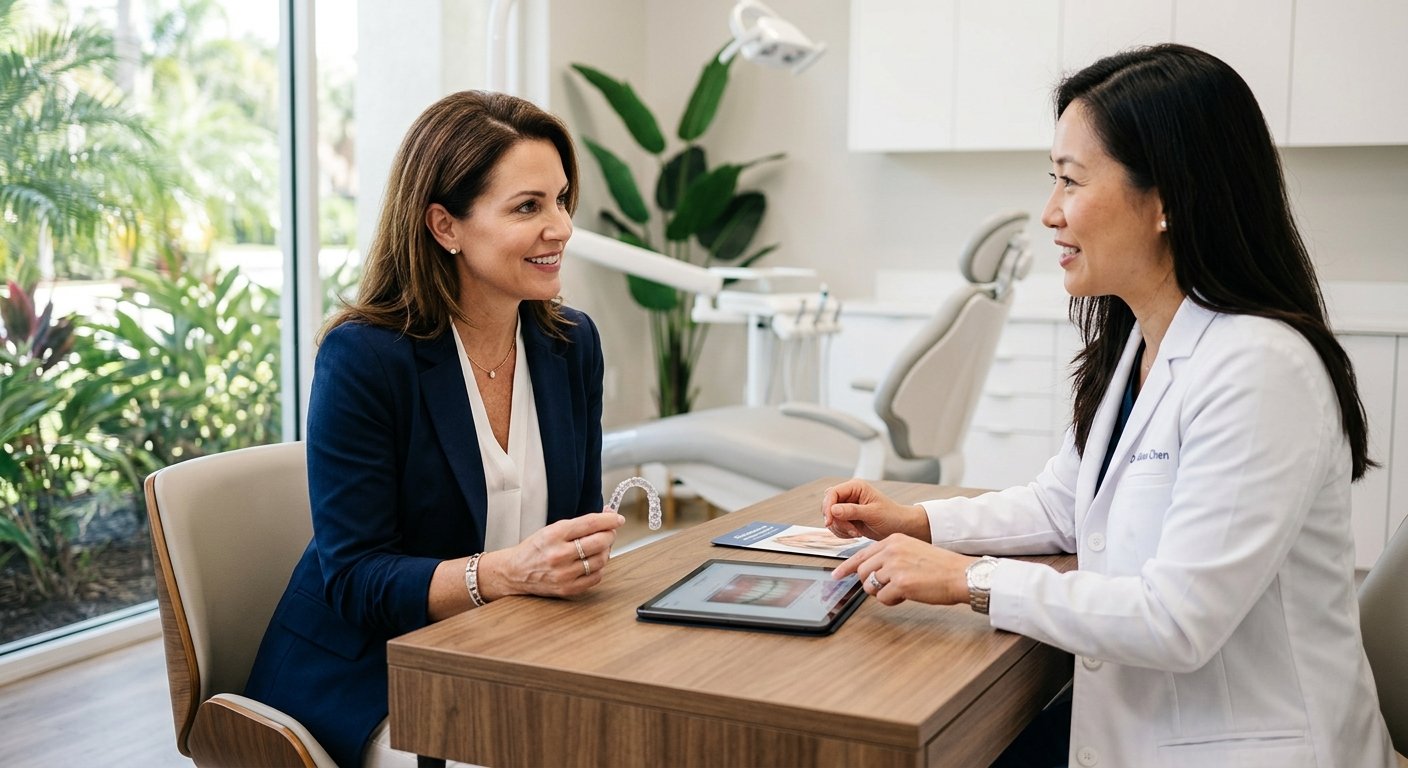
There’s a common assumption that orthodontic treatment is a rite of passage for teenagers, not something adults pursue in their forties, fifties, or beyond. That assumption has been quietly eroding for years. According to the American Association of Orthodontists, adult patients now make up a substantial and growing share of orthodontic treatment starts — and the trend continues to climb.
The reasons adults seek straighter teeth are often more layered than they were as teenagers. Some patients notice their teeth have shifted gradually over the decades — a condition called adult relapse, where teeth slowly drift from their original positions, especially if retainers weren’t worn consistently after earlier treatment. Others have lived with crowding or spacing their whole lives and are finally ready to address it now that they have the means and the motivation.
In Boca Raton and across southern Palm Beach County, we see patients pursuing adult orthodontics as part of a broader smile refresh — sometimes alongside porcelain veneers or whitening, sometimes on its own. The motivation is personal and valid at any age.
Teeth continue to shift throughout adulthood, even if you had braces as a teenager. It’s not unusual for someone in their 40s or 50s to notice gradual crowding they didn’t have in their 20s. This is a biological reality, not a failure to take care of your smile.
How Invisalign Actually Works
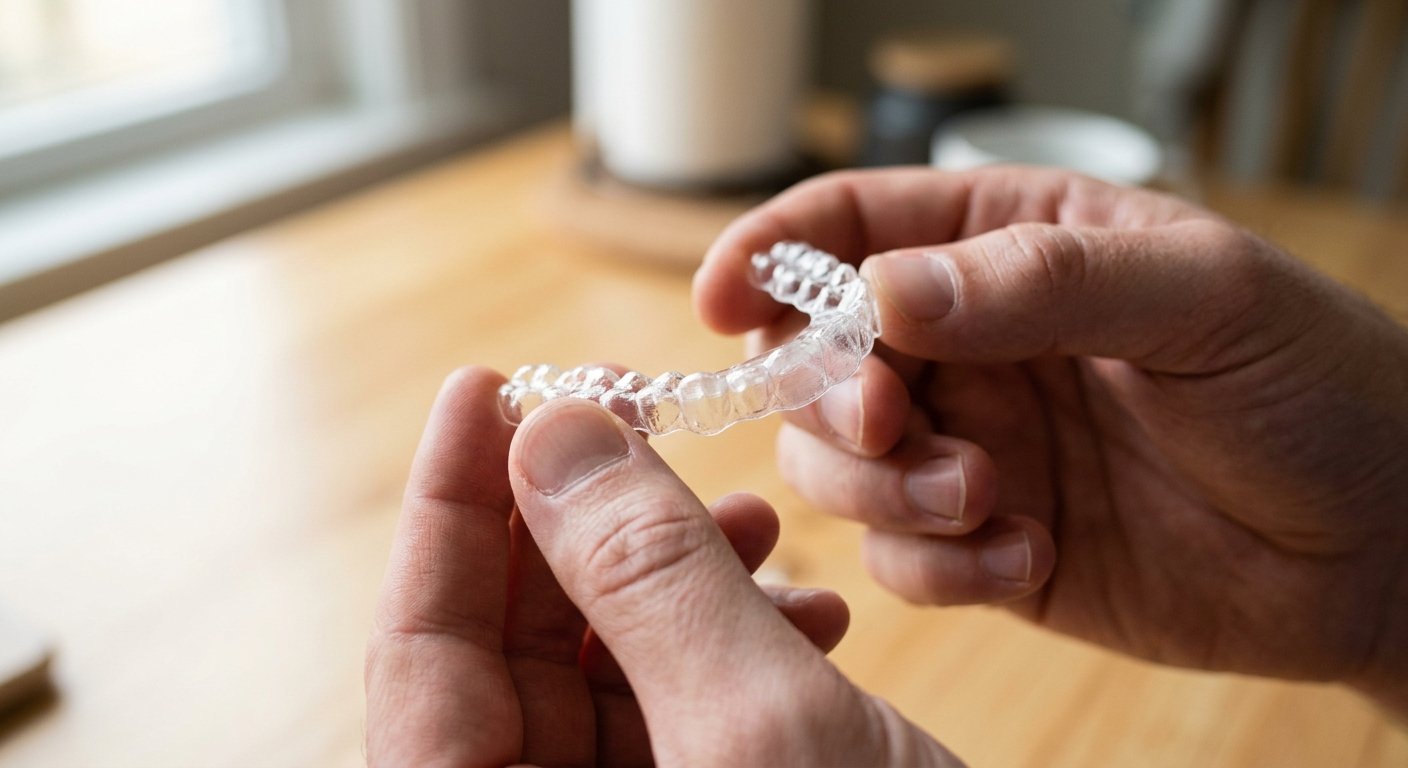
Invisalign uses a series of custom-made, removable clear plastic trays — called aligners — that gently guide teeth into a new position over time. Each set of trays is worn for approximately one to two weeks before advancing to the next set. The trays are smooth, fit snugly over your teeth, and are virtually invisible when worn.
Unlike traditional braces, there are no brackets bonded to your teeth and no wires to tighten. You remove the aligners to eat, drink anything other than water, and brush and floss normally. This last point matters especially for adults over 40, who are more likely to have crowns, bridges, or other existing dental work that makes flossing with braces genuinely difficult.
Consultation and digital scan
Your dentist takes a 3D digital scan of your teeth — no messy impressions. A treatment simulation shows you the projected result before you commit.
Custom aligners fabricated
Your trays are manufactured to fit your unique tooth anatomy and treatment plan, then shipped to the practice.
Wearing your aligners
You wear each set of trays for 20–22 hours per day, switching to the next set on schedule. Check-ins with your dentist happen roughly every 6–8 weeks.
Refinements if needed
Some patients need minor refinement trays near the end of treatment to fine-tune specific teeth. This is normal and included in most treatment plans.
Retention
After treatment, retainers are essential for keeping teeth in their new position. Your dentist will advise on the best retainer approach for your situation.
The Real Benefits Beyond a Straighter Smile
The case for clear aligners isn’t only about aesthetics, though there’s nothing wrong with wanting to feel confident in your smile. Misaligned teeth create genuine oral health challenges that compound over time.
Crowded teeth are harder to clean thoroughly, creating pockets where plaque accumulates and gum disease can develop. According to the CDC’s oral health data, nearly half of adults over 30 have some form of periodontal (gum) disease — a figure that makes preventive alignment a reasonable long-term strategy. Teeth that are badly out of alignment can also cause uneven wear, chipping, and stress on the jaw joint over time.
For adults who are already investing in their dental health — through implants, crowns, or a smile makeover — having aligned teeth protects that investment and makes maintenance simpler for years ahead.
If you’re considering veneers or other cosmetic work, your dentist may recommend aligning your teeth first. Placing veneers on properly positioned teeth typically produces a more natural, longer-lasting result and may require less tooth preparation.
Common Concerns for Adults — Answered Honestly
“Will it be obvious I’m wearing aligners?”
The trays are clear and form-fitting. Most people you interact with daily will not notice them. This is one of the primary reasons professionals and retirees throughout Boca Raton and Delray Beach choose clear aligners over traditional braces.
“Is it too late at my age?”
Teeth can be moved at any age, provided the gums and bone supporting them are healthy. The process is the same biologically — gradual, controlled pressure repositions the tooth within the jawbone. Healing may be slightly slower for older adults, which can mean treatment timelines are adjusted, but it does not mean treatment is impossible or inadvisable.
“What about the cost?”
Treatment cost varies depending on the complexity of your case and the length of treatment needed. Financing options are available at our Boca Raton practice to make treatment accessible — you can review those options on our finance and insurance page. A consultation is the right first step to understanding what your specific treatment would involve.
| Factor | Invisalign (Clear Aligners) | Traditional Braces |
|---|---|---|
| Visibility | Nearly invisible when worn | Clearly visible metal brackets |
| Removability | Removable for eating and cleaning | Fixed — cannot be removed |
| Cleaning ease | Normal brushing and flossing | Requires special tools around wires |
| Office visits | Every 6–8 weeks | Every 4–6 weeks for adjustments |
| Comfort | Smooth plastic, no sharp edges | Brackets and wires can irritate tissue |
| Works with existing dental work | Generally compatible; discuss with dentist | May complicate around bridges/implants |
When Invisalign May Not Be the Right Fit
Clear aligners are well-suited to mild to moderate alignment issues — crowding, spacing, and certain bite corrections. More complex bite problems sometimes require additional treatment or a different orthodontic approach. Adults with significant bone loss from gum disease may need periodontal treatment before orthodontics can begin safely.
This is why a thorough exam matters. At our Boca Raton practice, Dr. Sasha Winderbaum — who has placed over 10,000 crowns and brings more than 34 years of restorative and cosmetic dental experience — takes time to review your full oral health picture before recommending any treatment path. The goal is always the right solution for you, not the fastest upsell.
The best cosmetic dentistry is built on a healthy foundation first — alignment, gum health, and bite all factor into results that actually last.
Frequently Asked Questions
Can Invisalign fix my teeth if I had braces as a teenager?
Yes. Adult relapse — gradual tooth shifting after earlier orthodontic treatment — is very common, and Invisalign can address it effectively. The fact that you had braces previously doesn’t disqualify you; your dentist will assess your current tooth position and bone health to determine the best approach.
How long does Invisalign treatment take for adults?
Treatment length depends on the complexity of the case. Many adults complete treatment in 12 to 18 months, though minor corrections can take less time and more significant alignment changes may take longer. Your dentist will give you a realistic timeline after evaluating your teeth.
Does Invisalign work if I have crowns or dental implants?
Invisalign can often work alongside existing crowns and bridges, though implants themselves cannot be moved since they are anchored in bone. Your dentist will map out a treatment plan that accounts for any existing restorations and identifies whether any adjustments are needed beforehand.
Is Invisalign covered by dental insurance?
Some dental insurance plans include an orthodontic benefit that applies to Invisalign — coverage depends entirely on your specific plan and its limitations. Our team can help you understand what your plan may cover. Financing options are also available for patients who want to spread the cost over time.
What happens after Invisalign — do I need a retainer?
Yes, retainer wear after treatment is essential at any age. Teeth naturally want to drift back toward their original position, and a retainer — typically worn at night — prevents that. According to the American Association of Orthodontists, consistent retainer use is the single most important factor in maintaining your results long-term.
Ready to find out if Invisalign is right for you?
Schedule a consultation with Dr. Winderbaum at our Boca Raton office — we’ll review your full smile picture, walk you through your options, and answer every question without pressure. New-patient offers are available for qualifying visits.
About Boca Raton Cosmetic Dentist
Boca Raton Cosmetic Dentist is a locally rooted dental practice serving adults and families in Boca Raton and southern Palm Beach County with cosmetic and restorative dental care. The practice specializes in veneers, dental implants, smile makeovers, whitening, and trusted general dentistry, guided by Dr. Sasha Winderbaum. Patients are welcomed with a warm, judgment-free approach that addresses dental anxiety honestly and frames every treatment as a lasting investment in health and confidence. Visit bocaratoncosmeticdentist.com →