
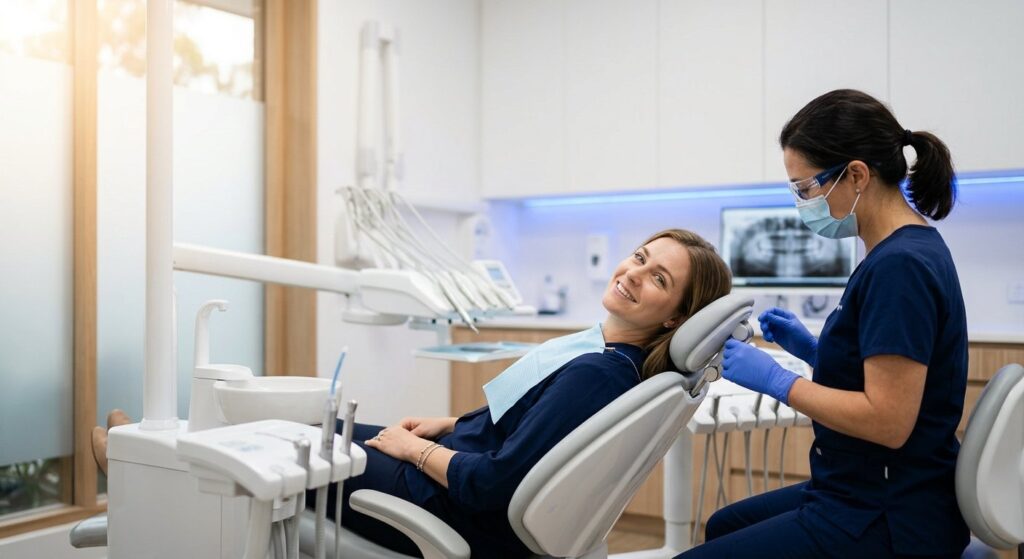
Getting a dental crown is not a painful procedure for most people. Modern local anesthesia numbs the area completely before any work begins, so what you feel during the appointment is pressure — not pain. Some mild soreness in the days after is normal and manageable. For anxious patients, understanding each step ahead of time makes a significant difference.
- Local anesthesia is placed before any tooth preparation, so the procedure itself should be pain-free.
- Post-procedure sensitivity is common for a few days and typically eases with over-the-counter relief.
- CAD/CAM same-day crowns can complete the entire process in one visit, reducing recovery time and eliminating a temporary crown stage.
- Most dental anxiety around crowns comes from not knowing what to expect — walking in informed helps enormously.
- Dr. Sasha Winderbaum has placed 10,000+ crowns at our Boca Raton practice, applying that experience to every case.
Why Dental Crowns Have an Undeserved Reputation
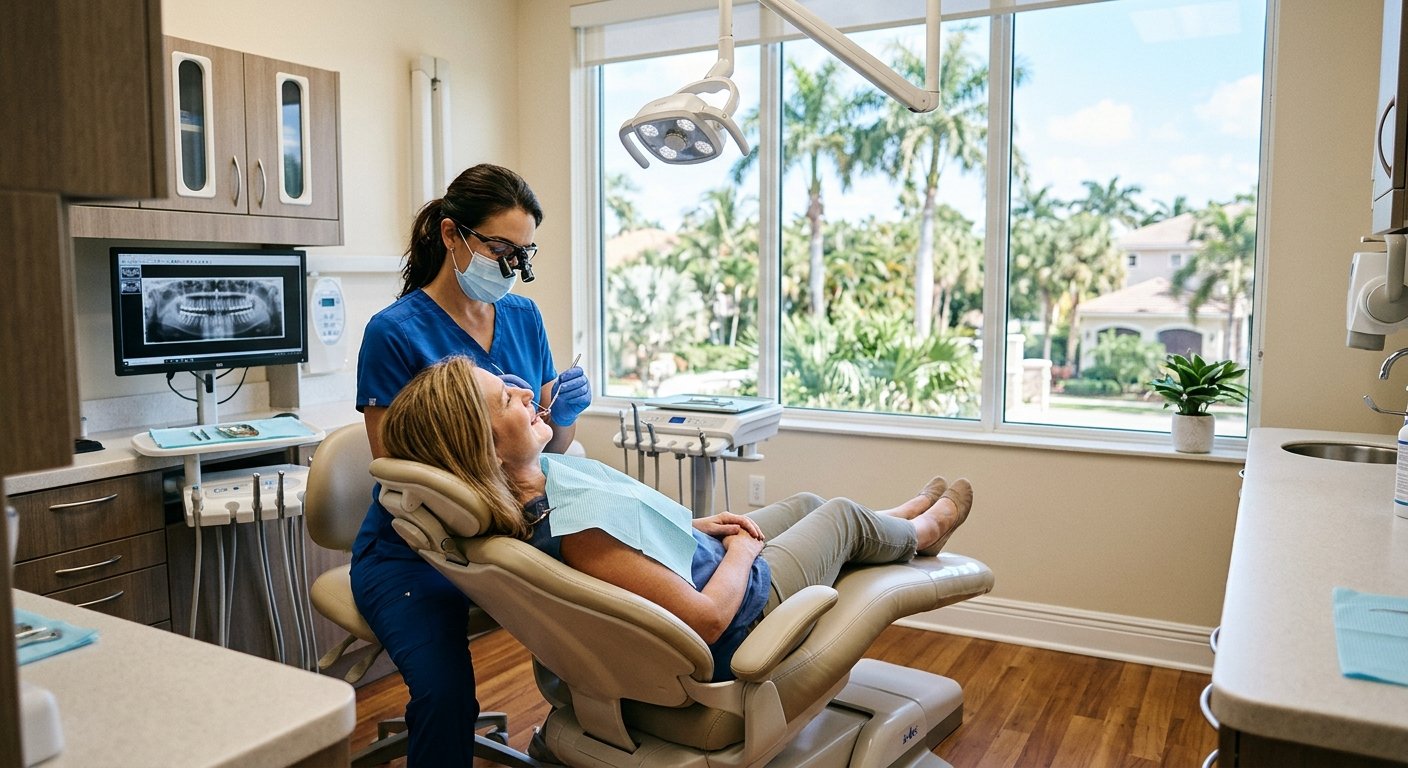
Many adults in Boca Raton put off treating a cracked tooth or a failing filling for months — sometimes years — because they expect a crown appointment to be an ordeal. That fear is understandable, and it’s worth naming honestly. The reputation is mostly outdated. Decades ago, anesthetic delivery was less precise and drilling tools were noisier and less efficient. Today, the experience is genuinely different.
A dental crown is a tooth-shaped cap that fits over a damaged or weakened tooth to restore its shape, function, and appearance. Crowns are among the most versatile restorations in dentistry — used after a root canal, to protect a cracked tooth, to anchor a bridge, or to cover an implant. Because they’re so common, the process has been refined extensively. What trips most patients up is anticipating pain that, with modern techniques, simply doesn’t have to happen.
The fear of a crown is almost always worse than the crown itself — and being prepared is the best anesthetic of all.
What Happens During a Crown Appointment
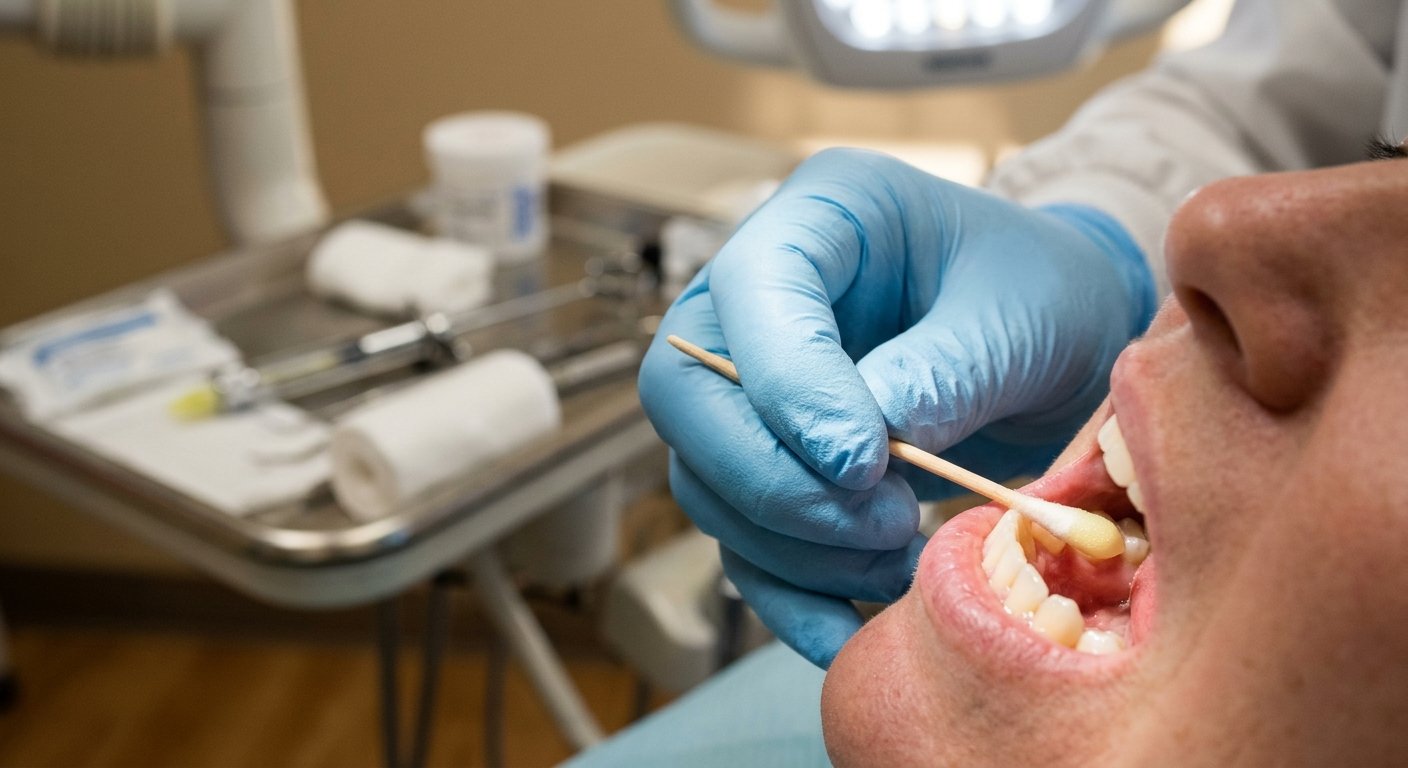
Understanding each phase of treatment is one of the most effective ways to reduce anxiety. Here’s what a typical crown procedure looks like from start to finish.
Numbing the area
Before anything else, a topical numbing gel is applied to the gum so you barely feel the anesthetic injection. Once the local anesthetic takes full effect — usually within a few minutes — the tooth and surrounding tissue are completely numb. You may feel pressure or vibration during the next steps, but not pain.
Shaping the tooth
The dentist reshapes the existing tooth to create the right foundation for the crown. This involves removing a small, controlled amount of outer tooth structure. Since the area is numb, patients typically describe this as feeling like gentle pressure or movement — not sharp sensation.
Imaging or impressions
At Boca Raton Cosmetic Dentist, we use digital scanning and CAD/CAM technology rather than traditional putty impressions. A small wand scans your tooth in seconds and sends a precise 3D model directly to our in-house milling unit. This is one of the most comfortable parts of the appointment.
Placing the crown
With same-day CAD/CAM crowns, the restoration is milled while you wait — often in under an hour. Once it’s ready, the fit and bite are tested, minor adjustments are made if needed, and the crown is bonded in place. You leave with a permanent crown the same day.
Same-Day CAD/CAM Crowns: How They Change the Experience
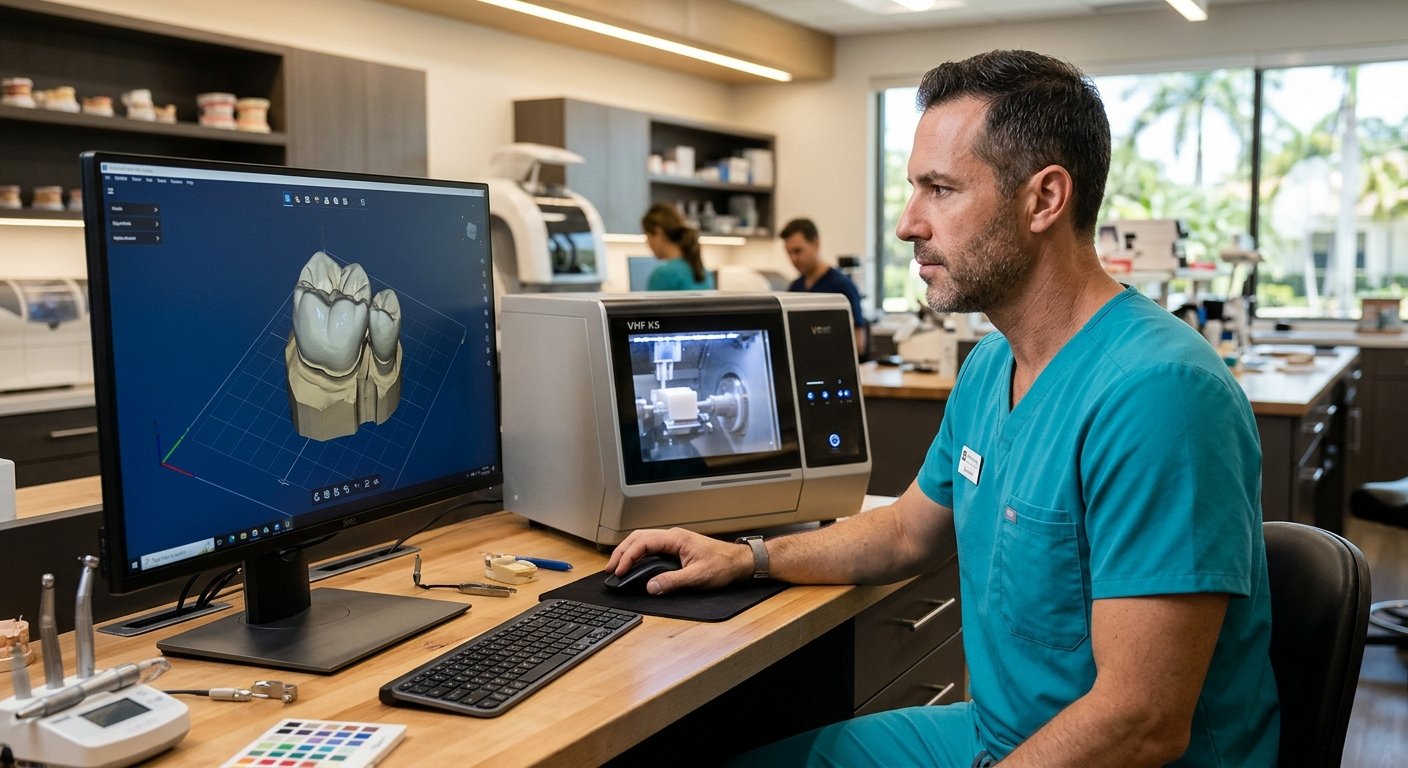
Traditional crown procedures required two separate appointments spread over one to three weeks, with a temporary crown in between. Temporaries can feel awkward, sometimes fall off, and require patients to be careful about what they eat for days on end. Same-day crowns eliminate that entirely.
CAD/CAM technology (computer-aided design and manufacturing) allows the entire crown to be designed digitally and milled from a high-quality ceramic block right in the office. The result is a precise, natural-looking restoration made in a single visit. For patients who have a cracked tooth and need a crown quickly, or who simply prefer fewer appointments, this approach is genuinely more comfortable — not just physically, but practically.
If dental anxiety is a real concern for you, tell the team before your appointment — not after you arrive. Knowing in advance allows us to plan extra time, walk through each step verbally, and make sure you feel in control throughout. Judgment-free, always.
At our Boca Raton practice, we’ve offered same-day crowns as part of our restorative care since they became available with reliable precision. The technology has matured considerably, and the fit, strength, and aesthetics of CAD/CAM restorations are well-established in dental literature. The American Dental Association recognizes all-ceramic and CAD/CAM crowns as clinically appropriate restorations for most posterior and anterior teeth.
What to Expect After the Crown Is Placed
Once the anesthetic wears off — usually two to four hours after the appointment — it’s normal to notice some tooth and gum sensitivity. This is your body’s natural response to the reshaping process, not a sign that something went wrong. For most people, this settles within two to five days.
Common post-crown experiences include:
- Mild sensitivity to hot or cold foods and drinks
- Slight gum tenderness around the base of the crown
- A new bite sensation as your jaw adjusts to the restoration
Over-the-counter pain relievers like ibuprofen or acetaminophen are typically enough to manage any discomfort. If sensitivity lingers beyond a week, or if your bite feels noticeably off after the first few days, it’s worth calling to have the bite checked — a minor adjustment is quick and easy.
Sensitivity after a crown is almost always temporary. Persistent or sharp pain — especially to pressure — can sometimes signal that the underlying nerve needs attention. Don’t wait it out; a quick check-in call saves a longer follow-up later. Reach us at (561) 999-0889.
How Long Do Dental Crowns Last?
This is one of the most common questions we hear, especially from patients weighing whether a crown is the right investment. According to a clinical review published in the Journal of Prosthodontic Research, all-ceramic crowns have demonstrated high survival rates over 10-year periods, with longevity influenced by oral hygiene, bite forces, and the specific material used.
Realistic expectations: a well-placed crown on a well-maintained tooth commonly lasts 10 to 15 years or more. Certain factors extend or shorten that range — grinding (bruxism), the location of the tooth, and how consistently you keep up with cleanings and exams. At our practice, we use Guided Biofilm Therapy (GBT) cleanings, which keep the gum tissue around crowns healthier over time. Healthier gum margins mean the crown’s seal stays intact longer.
| Factor | Extends Crown Life | Reduces Crown Life |
|---|---|---|
| Oral hygiene | Consistent brushing, flossing, GBT cleanings | Plaque buildup at crown margins |
| Bite forces | Normal biting; night guard if needed | Teeth grinding or clenching (bruxism) |
| Tooth location | Front teeth (lighter chewing load) | Back molars (heavy grinding pressure) |
| Material | High-strength ceramic, CAD/CAM precision fit | Older materials with less precise seals |
Addressing the Cost Concern Honestly
Cost is one of the most common objections we hear — and it deserves a straightforward answer. Crowns represent a significant dental investment, and it makes sense to understand what you’re getting before you commit. We don’t quote specific prices here because every case is different: the material chosen, whether 3D imaging or additional diagnostics are needed, and your insurance coverage all affect the final number.
What we can say honestly: delaying treatment on a damaged tooth rarely makes financial or physical sense. A crack that needs a crown today may need a root canal or an extraction tomorrow if left untreated — and those paths cost considerably more. Flexible financing options are available at our practice, and our team will walk you through your options at your consultation so nothing is a surprise. You can review financing details at our Finance & Insurance page.
If you’re also thinking about the broader picture of your smile — whether that’s porcelain veneers on other teeth alongside restorative crowns, or a full smile makeover — a single consultation can cover all of it. Dr. Winderbaum’s 34+ years of experience and 10,000+ crowns placed means you’re working with someone who has seen nearly every scenario and will recommend only what genuinely serves you.
Frequently Asked Questions
Will I feel anything during the crown procedure?
You should not feel pain. Local anesthesia numbs the tooth and surrounding tissue before any preparation begins. Most patients describe the sensation as mild pressure or vibration. If you feel sharp discomfort at any point, you can ask the dentist to pause and add more anesthetic — that’s completely normal and expected.
How long does a same-day crown appointment take?
A same-day CAD/CAM crown appointment typically takes two to three hours from start to finish, including numbing time, tooth preparation, digital scanning, milling, and final placement. It varies depending on the complexity of the case, but you leave with a permanent crown in a single visit.
Is a crown necessary for a cracked tooth?
It depends on the severity and location of the crack. Minor surface cracks sometimes don’t require a crown, but a crack that extends into or near the pulp (the inner nerve tissue) typically needs one to prevent the tooth from splitting further or becoming infected. A clinical exam — often with digital X-rays or 3D imaging — gives the clearest answer.
What if I have dental anxiety about getting a crown?
You’re not alone — dental anxiety is very common, and our team takes it seriously. Letting us know before your appointment allows us to plan extra time, explain each step as we go, and make sure you feel in control. No judgment, no rushing. Comfortable, judgment-free care is something we genuinely stand behind.
How do I care for a new crown?
Brush and floss normally, including around the crown margin where it meets the gum. Avoid using that tooth to crack hard items like ice or popcorn kernels. Regular GBT cleanings and exams help keep the gum tissue around the crown healthy and allow early detection of any wear or sealing issues before they become bigger problems.
Ready to Stop Putting It Off?
Whether you have a cracked tooth, a failing old crown, or simply want to understand your options, a conversation with our Boca Raton team is the easy first step — no pressure, just honest answers.
About Boca Raton Cosmetic Dentist
Boca Raton Cosmetic Dentist is a locally rooted dental practice serving adults and families in Boca Raton and southern Palm Beach County with cosmetic and restorative dental care. The practice specializes in veneers, dental implants, smile makeovers, whitening, and trusted general dentistry, guided by Dr. Sasha Winderbaum. Patients are welcomed with a warm, judgment-free approach that addresses dental anxiety honestly and frames every treatment as a lasting investment in health and confidence. Visit bocaratoncosmeticdentist.com →