

Both composite and porcelain veneers can dramatically improve the look of your smile, but they work differently and suit different needs. Porcelain veneers offer superior durability and a more lifelike appearance, while composite veneers cost less upfront and require little to no enamel removal. The right choice depends on your goals, timeline, and how long you want results to last.
- Porcelain veneers typically last 10–15 years or longer with proper care; composite veneers generally last 5–7 years.
- Composite veneers are usually completed in a single visit; porcelain veneers require two appointments.
- Porcelain is more stain-resistant and closely mimics natural tooth enamel in translucency.
- Neither option is inherently “better” — your dentist will help match the right veneer to your smile goals and budget.
- A consultation with a cosmetic dentist is the best first step before committing to either material.
Many people searching for a smile improvement reach a fork in the road: they’ve heard “veneers” are the answer, but then discover there are two very different types. That discovery — composite or porcelain? — is where confusion sets in. Understanding what separates the two materials, and what each one can realistically do for your smile, makes the decision far less overwhelming.
What Are Dental Veneers?
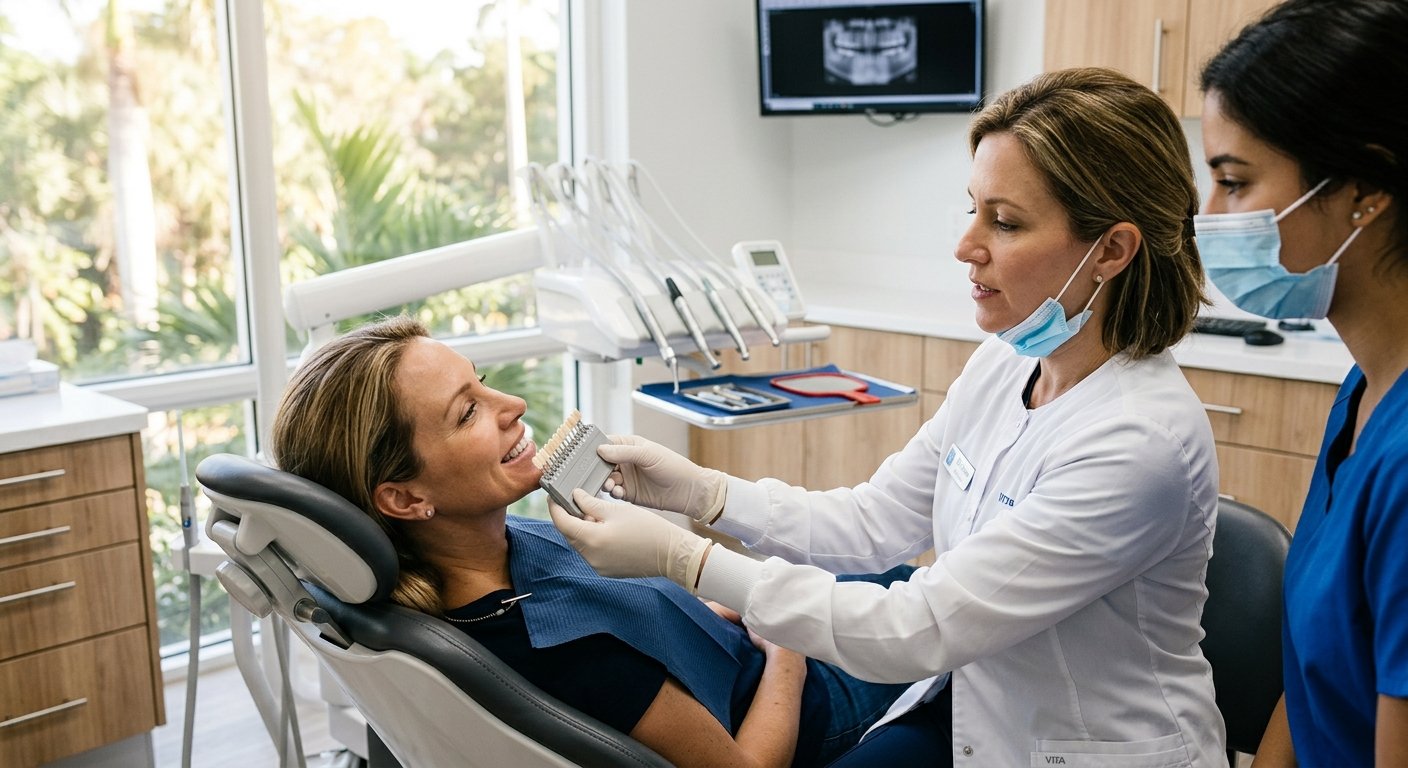
A veneer is a thin shell bonded to the front surface of a tooth. It covers imperfections — chips, cracks, discoloration, minor misalignment, or gaps — and creates a uniform, polished appearance. Think of it as a fitted cover that reshapes how your tooth looks without removing the entire tooth structure the way a crown does.
The two most common veneer materials are composite resin and dental porcelain. Both are applied to the visible surface of teeth, but the similarities largely stop there. The material, the process, and the longevity are quite different, and each carries its own set of trade-offs.
Composite Resin Veneers: The Flexible Option
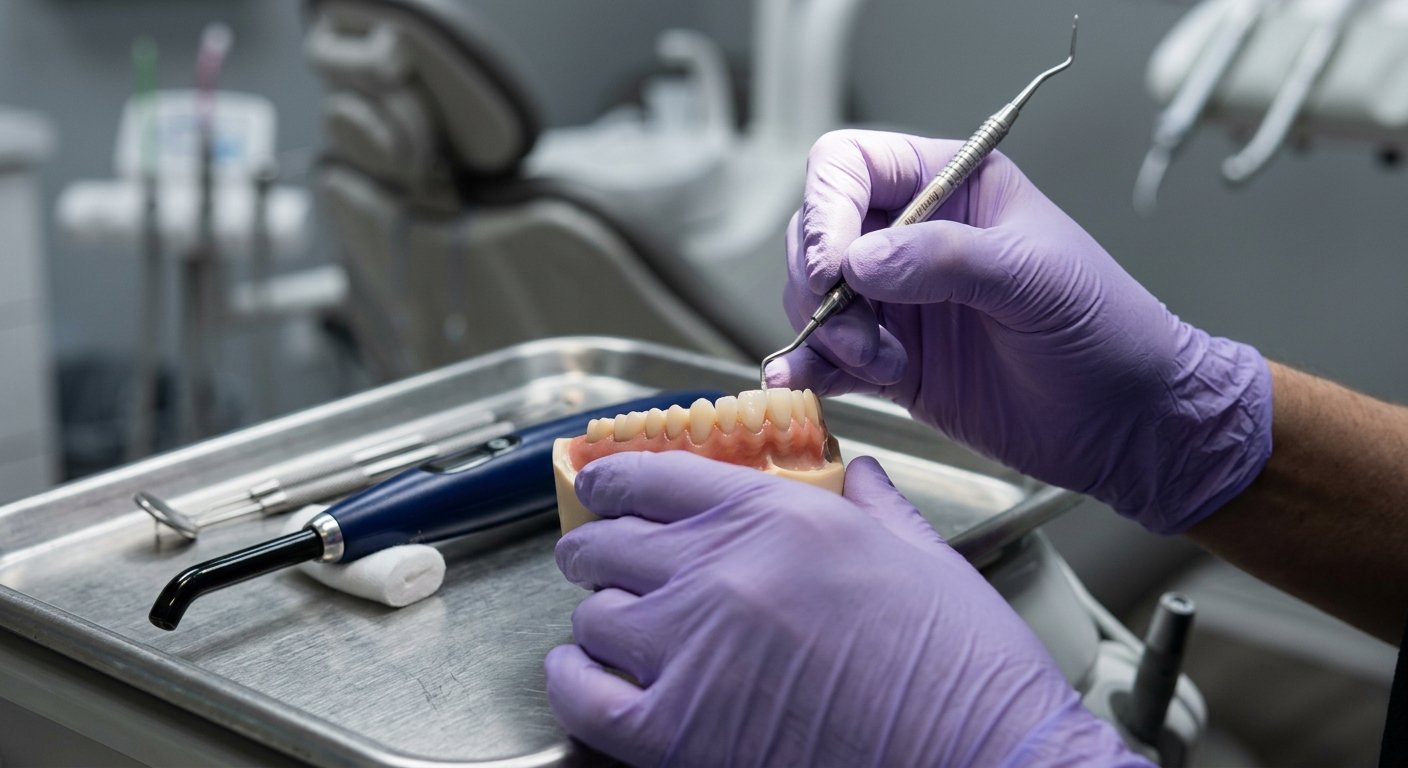
Composite resin is the same tooth-colored material used for dental fillings. When used as a veneer, your dentist applies it directly to the tooth, sculpts it by hand, and cures (hardens) it with a special light — all in one appointment. Because the work happens chairside, there’s no lab involved and no waiting period.
Advantages of Composite Veneers
- Single-visit treatment: Most composite veneers are completed in one appointment, which suits patients with tight schedules.
- Minimal tooth preparation: Little to no enamel is removed, keeping the treatment reversible in many cases.
- Easier to repair: If a composite veneer chips, it can often be repaired during a routine visit rather than replaced entirely.
- Lower upfront investment: Without lab fabrication costs, composite work typically costs less per tooth than porcelain.
Limitations of Composite Veneers
- More susceptible to staining from coffee, red wine, and tobacco over time.
- Less translucent than porcelain, which can look slightly less natural under certain lighting.
- Shorter lifespan — according to the American Dental Association, composite restorations generally require replacement more frequently than ceramic alternatives.
Composite veneers are an excellent option if you want to preview a new smile before committing to porcelain, or if you have a specific tooth — a chip or a gap — you’d like corrected without a multi-step process.
Porcelain Veneers: The Long-Term Investment

Porcelain veneers are custom-crafted in a dental laboratory from a thin ceramic shell. Your dentist takes precise impressions or digital scans of your teeth, sends them to the lab, and places temporary veneers while your permanent set is fabricated. The final veneers are then bonded at a second appointment. The result is a restoration that closely mimics the light-reflecting properties of natural enamel.
For patients exploring a complete smile makeover, porcelain is often the material of choice because of how consistently it performs across multiple teeth at once.
Advantages of Porcelain Veneers
- Superior aesthetics: Porcelain’s translucency mimics natural tooth enamel more closely than composite resin.
- Stain resistance: The glazed surface of porcelain resists discoloration far better than composite over time.
- Durability: With good oral hygiene habits, porcelain veneers can last 10–15 years or more, according to research published by the National Institutes of Health.
- Custom fit and color: Each veneer is individually designed to complement your facial features, skin tone, and bite.
Limitations of Porcelain Veneers
- Requires two appointments and a short waiting period between them.
- A thin layer of enamel must be removed to create room for the veneer — this makes the process irreversible.
- If a porcelain veneer cracks, the entire veneer typically needs to be replaced rather than repaired.
| What to compare | Composite Veneers | Porcelain Veneers |
|---|---|---|
| Appointments needed | One visit | Two visits |
| Typical lifespan | 5–7 years | 10–15+ years |
| Stain resistance | Moderate | High |
| Enamel removal | Minimal to none | Small amount required |
| Repairability | Often repairable | Usually replaced |
| Appearance | Natural-looking | Highly lifelike |
| Reversibility | Often reversible | Irreversible |
How the Decision Really Gets Made
The choice between composite and porcelain isn’t just about material properties — it’s about your specific teeth, your goals, and how you’ll care for your smile long-term. A skilled cosmetic dentist will consider several factors before making a recommendation.
Assess your smile goals
Are you correcting one chipped tooth, or redesigning the appearance of your entire smile? Composite may serve a single tooth beautifully; porcelain shines when multiple teeth need transformation.
Review your oral health baseline
Veneers — either type — work best on healthy teeth and gums. If there’s active decay or gum issues, those need attention first.
Consider your lifestyle
If you drink a lot of coffee or red wine, porcelain’s stain resistance becomes a meaningful advantage. If you grind your teeth, your dentist may factor that into their recommendation or suggest a night guard to protect any veneers.
Think about timeline and budget
Composite costs less upfront but may need replacing sooner. Porcelain costs more initially but often provides a longer return on that investment. Both are worth discussing with your dental team, and financing options can make porcelain more accessible.
The best veneer material is the one that fits your smile goals, your oral health, and your life — not simply the one that costs less at first glance.
What Patients in Boca Raton Often Ask About
For patients in Boca Raton and southern Palm Beach County, veneers are a common topic at consultations — and so is the question of whether whitening should come first. If you have natural teeth that won’t be covered by veneers, it makes sense to whiten them before your veneers are fabricated so the lab can match the porcelain to your brightest shade. GLO teeth whitening is a popular option at our practice for exactly this reason.
Patients who are weighing more extensive work — including crowns, implants, or full-mouth reconstruction alongside veneers — often find that a smile makeover consultation helps them see the full picture before committing to any single treatment.
If you’ve been putting off cosmetic dental work because you’re nervous about the process, you’re not alone. Both composite and porcelain veneer placements are gentle procedures, and our team is experienced in working with anxious patients at a calm, unhurried pace. There’s no judgment here — only options.
For patients exploring porcelain veneers in Boca Raton, the process starts with a thorough consultation where we look at photographs, discuss goals, and review any underlying dental health concerns. The American Dental Association recommends that veneers only be placed on structurally sound teeth — and we take that guideline seriously at every step.
Frequently Asked Questions
How long do porcelain veneers last compared to composite?
Porcelain veneers typically last 10–15 years or longer with consistent oral hygiene and regular dental visits. Composite veneers generally have a shorter lifespan of around 5–7 years before they may need polishing, repair, or replacement. Lifestyle factors like grinding habits and diet can affect either material.
Are veneers reversible?
Composite veneers are often considered reversible because minimal or no enamel is removed during placement. Porcelain veneers require a thin layer of enamel to be permanently removed, which means the process is not reversible — you’ll always need a veneer or crown on that tooth going forward.
Can veneers fix crooked teeth?
Veneers can improve the appearance of mildly uneven or slightly misaligned teeth, but they are a cosmetic solution, not an orthodontic one. For significant crowding or bite issues, orthodontic treatment may be more appropriate. Your cosmetic dentist can advise which approach makes sense for your specific case.
Will veneers look natural?
Both composite and porcelain veneers can look very natural when placed by an experienced cosmetic dentist. Porcelain has an edge in mimicking the translucency of natural enamel, especially for smile transformations involving multiple front teeth. Custom shading and shaping ensure the result complements your overall appearance.
Do I need to do anything special to care for veneers?
Standard oral hygiene — brushing twice daily, flossing, and attending regular dental cleanings — is all most patients need. Avoiding biting into very hard objects (ice, hard candy) and wearing a night guard if you grind your teeth will help protect your veneers. Composite veneers may benefit from periodic polishing at your cleaning appointments.
Ready to Explore Your Veneer Options?
Schedule a cosmetic consultation with Dr. Sasha Winderbaum and our Boca Raton team — we’ll walk you through both options, answer every question, and help you make a confident, informed choice for your smile.
About Boca Raton Cosmetic Dentist
Boca Raton Cosmetic Dentist is a locally rooted dental practice serving adults and families in Boca Raton and southern Palm Beach County with cosmetic and restorative dental care. The practice specializes in veneers, dental implants, smile makeovers, whitening, and trusted general dentistry, guided by Dr. Sasha Winderbaum. Patients are welcomed with a warm, judgment-free approach that addresses dental anxiety honestly and frames every treatment as a lasting investment in health and confidence. Visit bocaratoncosmeticdentist.com →