
You may be a good candidate for dental implants if you have one or more missing teeth, healthy or treatable gum tissue, and adequate jawbone density — or if you’re tired of living with a denture that slips or a gap that affects your confidence. Implants are the only tooth-replacement option that preserves jawbone and functions like a natural tooth root, making them worth considering at almost any adult age.
- Missing teeth, failing teeth, loose dentures, and bone loss are all common reasons adults in Boca Raton explore implants.
- Modern implants exceed a 95% long-term success rate — one of dentistry’s most well-documented outcomes.
- Candidacy depends on bone density, gum health, and overall health — a consultation clarifies your situation quickly.
- All-On-4 implants offer a full-arch solution when multiple or all teeth are missing.
- Financing options are available, and cost always varies by case — a personalized treatment plan is the only accurate way to budget.
If you’ve ever caught yourself covering your mouth when you laugh, or quietly worrying about whether a partial denture will shift at the wrong moment, you’re not alone. Millions of adults are living with tooth loss or failing dental work, and many assume implants aren’t an option for them — because of age, cost concerns, or a vague worry that their mouth “isn’t good enough.” The reality is often kinder than the fear.
What Makes Someone a Good Implant Candidate?
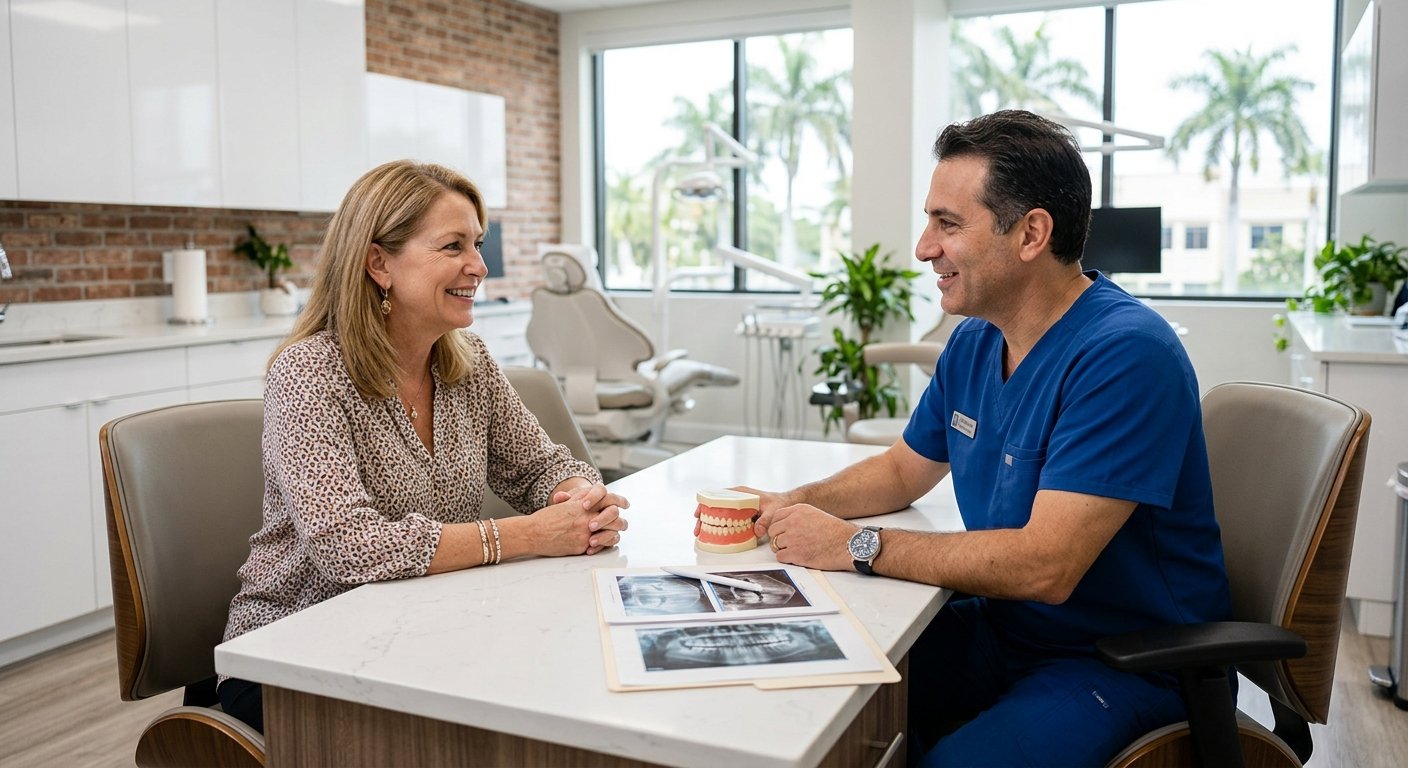
Dental implants are titanium posts placed into the jawbone that act as artificial tooth roots. Over several months, bone fuses to the titanium in a process called osseointegration, creating a stable, long-term anchor for a crown, bridge, or full arch of teeth. According to the American Dental Association, implants are considered the standard of care for replacing missing teeth when candidacy criteria are met.
Candidacy isn’t a simple checklist — it’s a clinical picture. Bone volume, gum health, systemic health, and your goals all factor in. The seven signs below are the most common indicators that an implant consultation is worth your time.
Sign 1: You Have One or More Missing Teeth
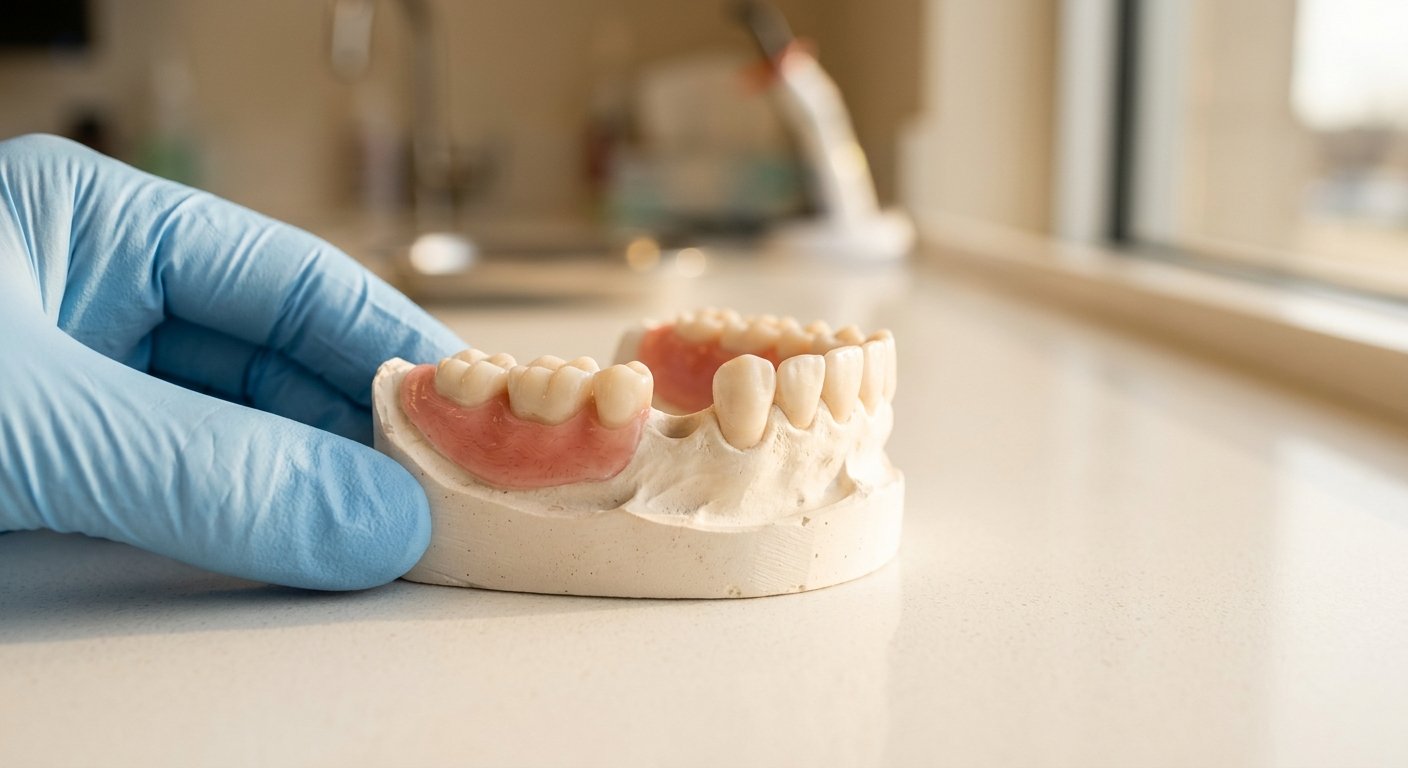
This is the most obvious sign — and the most common reason patients in Boca Raton and across southern Palm Beach County first ask about implants. A single missing tooth might not feel urgent, but the gap it leaves allows neighboring teeth to drift and the underlying jawbone to shrink over time. The sooner a missing tooth is addressed, the simpler the solution tends to be.
Implants replace both the root and the visible crown, which means no adjacent teeth need to be filed down (as with a traditional bridge). If you’re missing one tooth or several in different areas, individual implants may be the most conservative long-term choice. You can learn more about the full process on our dental implants page.
Sign 2: You Have a Tooth That Can’t Be Saved
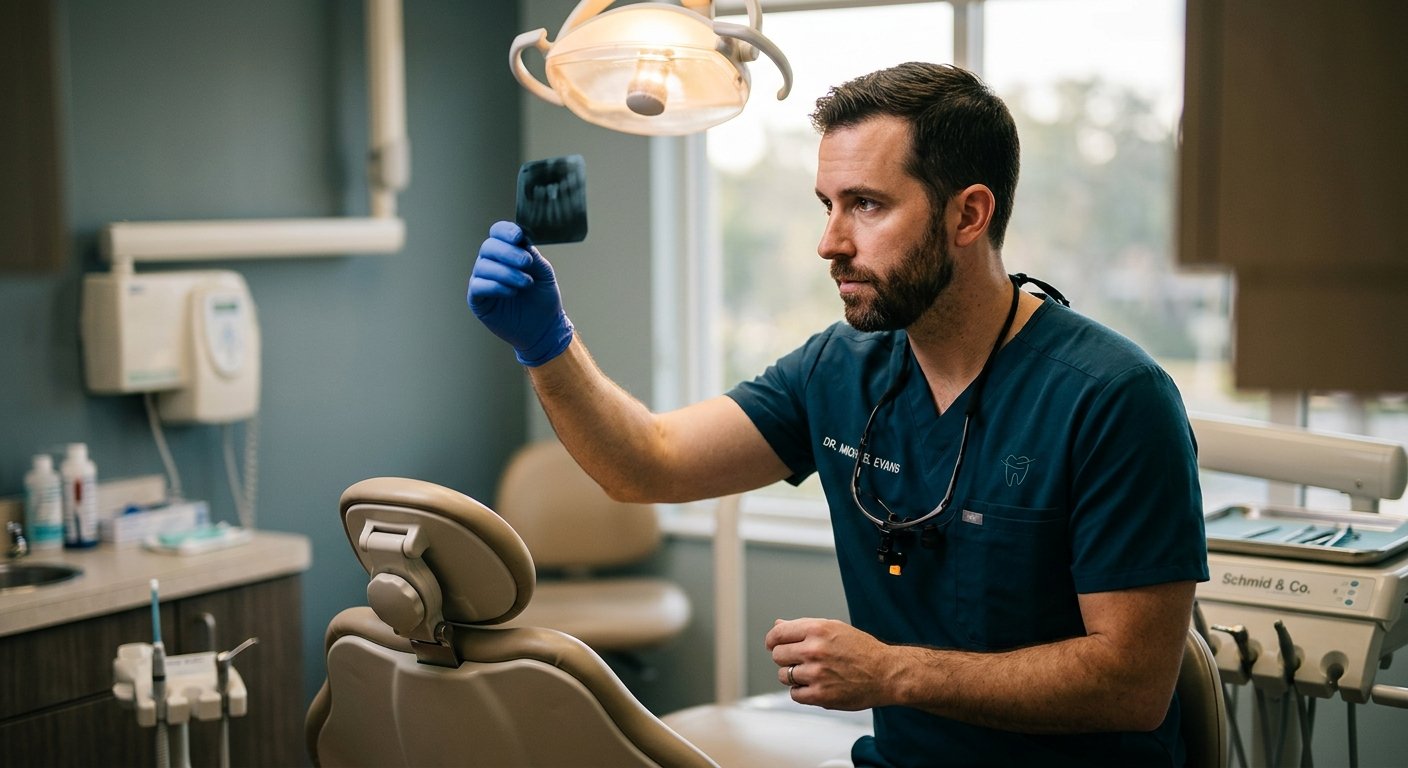
Not every tooth that hurts needs to come out — but some do. Severe decay, a fractured root, or advanced infection can reach a point where restoration is no longer viable. If your dentist has told you a tooth needs extraction, planning for an implant at the same time (or shortly after) prevents the bone loss that begins almost immediately once a tooth is removed.
Ask about implant timing before your extraction, not after. Placing an implant close to the time of removal can preserve more bone and simplify the overall treatment process.
Sign 3: You’re Unhappy With Dentures or Partials
Traditional dentures and partial dentures serve a real purpose, but they come with well-known limitations — clicking, slipping while eating or speaking, dietary restrictions, and the ongoing cost of adhesives and relining. If you’ve been managing with dentures but find yourself avoiding certain foods or social situations because of them, that’s a meaningful quality-of-life signal worth discussing.
Implant-supported options — including All-On-4 dental implants for full-arch replacement — snap or screw onto implants for stability that dentures simply can’t match. All-On-4 uses just four strategically placed implants to support an entire arch of teeth, making it a practical solution for patients who’ve lost most or all of their teeth.
Sign 4: You Have Jawbone Loss
Here’s something many patients don’t realize: every day a tooth root is absent, the surrounding jawbone slowly resorbs — it has no stimulation and the body gradually recycles it. This is why long-term denture wearers often develop a sunken facial appearance over time. Research published by the National Institutes of Health documents the direct link between tooth loss and ongoing alveolar bone resorption.
Implants are the only replacement option that actively stimulates the jawbone the way a natural root does, halting further loss. Patients who already have some bone loss may still be candidates — bone grafting procedures can rebuild volume before implant placement. A 3D cone-beam scan (CBCT), which our Boca Raton office uses, gives a precise picture of remaining bone density without guesswork.
Implants are the only tooth replacement that stimulates the jawbone the way a natural root does — preserving facial structure for years to come.
Sign 5: You Have Healthy Gums (or Treatable Gum Disease)
Gum health is a prerequisite for implant success. Active periodontal (gum) disease creates a bacterial environment that can interfere with osseointegration — the fusion of the implant to the bone. However, a diagnosis of gum disease doesn’t automatically disqualify you. Treated and stable gum disease is a very different picture from active, untreated infection.
If gum disease is a concern, we’ll address it first — often through our Guided Biofilm Therapy (GBT) cleaning protocol, which uses ultrasonic technology to remove biofilm more thoroughly and comfortably than traditional scaling. Healthy gums after treatment open the door to implant candidacy for many patients who assumed it was out of reach. Explore our GBT Cleaning & Exams page to learn more.
Sign 6: You’re an Adult in Reasonable Overall Health
Implants aren’t limited by age in the way many people assume. Adults in their 60s, 70s, and beyond are successfully treated every day. The relevant factors are medical, not chronological: uncontrolled diabetes, active chemotherapy, or certain bone-affecting medications can affect healing and will be evaluated during your consultation. Most otherwise healthy adults — including those who have managed conditions like controlled diabetes or heart disease — can be implant candidates.
| Replacement Option | Preserves Jawbone | Fixed (Non-Removable) | Typical Lifespan |
|---|---|---|---|
| Dental Implant | Yes | Yes | Decades with care |
| Traditional Bridge | No | Yes | 10–15 years |
| Removable Denture | No | No | 5–8 years |
| All-On-4 | Yes | Yes (arch-supported) | Decades with care |
Sign 7: You’re Ready to Invest in a Long-Term Solution
The most common objection to implants is cost — and it’s a fair one to raise honestly. Implants typically cost more upfront than dentures or bridges. But they are also designed to last far longer, often decades, without the recurring replacement costs that other options accumulate. When you factor in the preserved bone, the elimination of denture adhesives and relining, and the improvement to chewing function and confidence, the long-term value is compelling.
Cost varies based on the number of implants, any preparatory procedures, and your unique anatomy. We never quote a one-size-fits-all price — a personalized treatment plan is the only honest way to give you accurate numbers. Financing options are available to make treatment manageable; visit our Finance & Insurance page for current options.
Many patients who come to us for implant consultations mention they’ve put this off for years because of fear. That’s completely understandable, and there’s no judgment here. Dr. Winderbaum and the team take a comfort-first approach, explain every step in plain language, and move at your pace. You don’t have to have it all figured out before you call.
Frequently Asked Questions
Am I too old for dental implants?
Age alone is not a disqualifying factor. Adults in their 60s, 70s, and beyond regularly receive dental implants with excellent outcomes. Candidacy is based on bone density, gum health, and overall medical health — not the number on your birthday. A consultation is the best way to find out where you stand.
What if I’ve already lost a lot of bone in my jaw?
Significant bone loss doesn’t automatically rule out implants. Bone grafting can rebuild volume in many cases before implant placement. 3D imaging at our Boca Raton office gives a precise assessment of remaining bone so we can discuss realistic options for your specific situation.
How long does the dental implant process take?
The full implant process — from placement to final crown — typically spans three to six months, depending on whether preparatory procedures like grafting are needed and how quickly your bone heals. Some patients with favorable anatomy may qualify for faster timelines. Your treatment plan will outline a realistic schedule.
What is All-On-4 and who is it for?
All-On-4 is a full-arch implant solution that uses just four implants to support a complete set of upper or lower teeth. It’s designed for patients who are missing most or all of their teeth — or who are currently wearing full dentures and want a fixed, stable alternative. It can often be completed with fewer preparatory procedures than traditional full-arch implants.
Does getting a dental implant hurt?
Implant placement is performed with local anesthesia, and most patients report that the procedure itself is more comfortable than they anticipated. Some soreness in the days following placement is normal and typically managed with over-the-counter pain relief. Comfort levels vary by individual, and our team discusses what to expect before any procedure begins.
Find Out If Implants Are Right for You
Dr. Winderbaum and our Boca Raton team offer implant consultations for new patients — with 3D imaging to give you a clear picture of your options from the very first visit.
About Boca Raton Cosmetic Dentist
Boca Raton Cosmetic Dentist is a locally rooted dental practice serving adults and families in Boca Raton and southern Palm Beach County with cosmetic and restorative dental care. The practice specializes in veneers, dental implants, smile makeovers, whitening, and trusted general dentistry, guided by Dr. Sasha Winderbaum. Patients are welcomed with a warm, judgment-free approach that addresses dental anxiety honestly and frames every treatment as a lasting investment in health and confidence. Visit bocaratoncosmeticdentist.com →